Where not to use cleaning wipes
Date
Where Not to Use Disinfectant Wipes
A coffee spill on the desk, fingerprints on a screen, a mark on the sofa. When there is a pack of cleaning wipes nearby, it is tempting to use one for everything.
The trouble is that a product made for a kitchen worktop may not suit a leather chair or a laptop screen. Some surfaces tolerate disinfectants well. Others need a gentler approach, and the damage may only become noticeable after repeated cleaning.
Before using disinfectant wipes, check the label and the care instructions for the item you are cleaning. These six areas deserve a closer look.
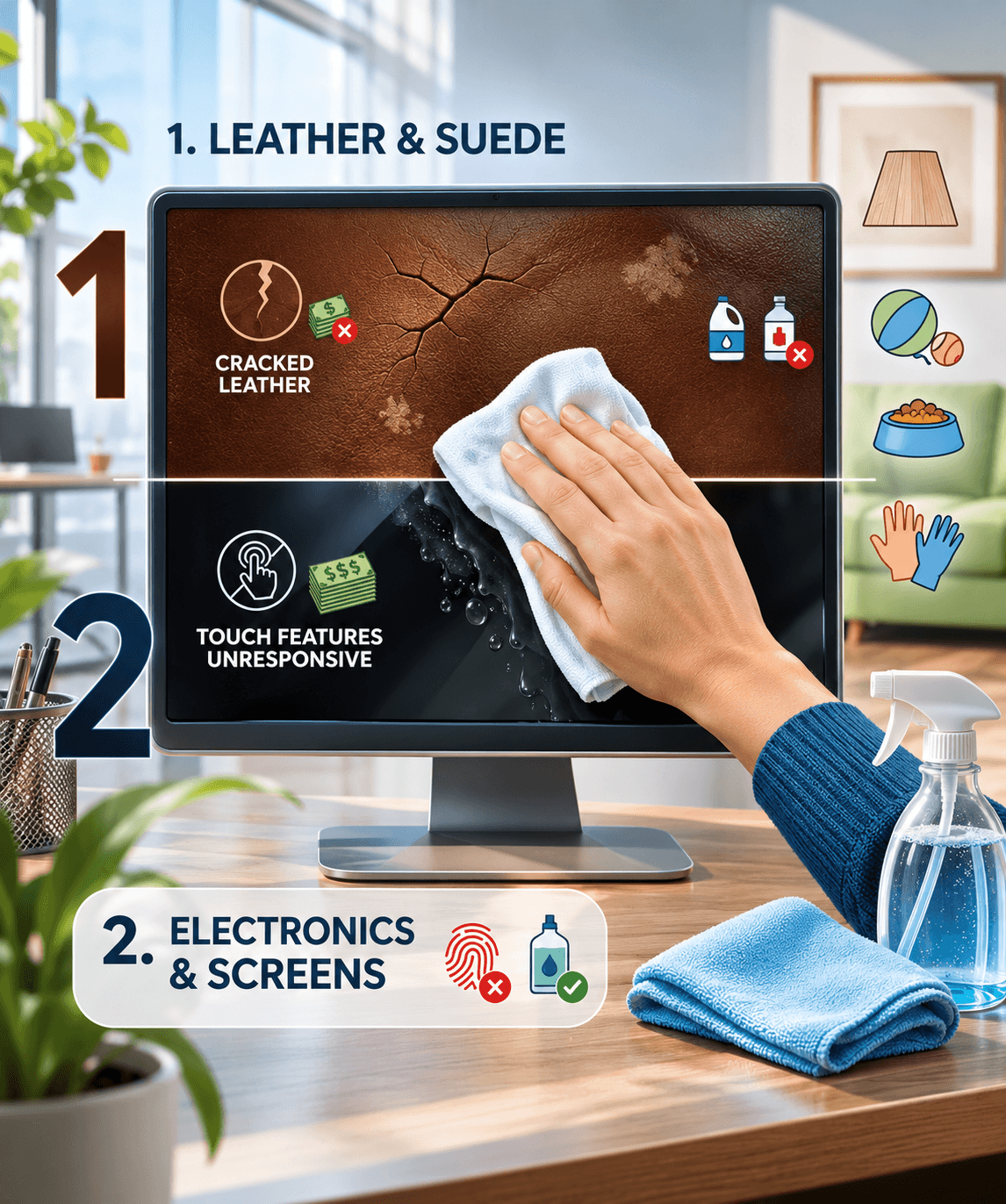
Leather and suede furniture
Leather chairs and sofas can lose their finish or develop patches if they are cleaned with an unsuitable product. Suede is particularly easy to mark, so a damp household wipe is rarely a sensible first choice.
For everyday dust, use a soft cloth. If there is a stain, look for a cleaning method recommended for that type of leather or suede. Check whether a conditioner is suitable before applying one, and try any approved product on a hidden area first.
Laptops, phones and touchscreens
Screen care varies by device. Some manufacturers allow specific disinfectant wipes, while others advise against them on certain displays or coatings. A wipe that is suitable for a keyboard may not be suitable for the screen beside it.
Follow the instructions for your model. Use a soft, lint-free cloth and avoid spraying liquid directly onto the device. Take care around ports, speakers and the edges of the screen, where moisture can get inside.
Vinyl seats and car interiors
Vinyl is hard-wearing, but that does not make it compatible with every cleaner. Strong solvents and unsuitable products can affect its appearance or finish, particularly with frequent use.
Check the care guidance before wiping down a dashboard, vehicle seat or upholstered chair. A cleaner intended for that material is a better starting point than whichever disinfectant happens to be nearby.
Children's toys and pet bowls
Anything that goes into a mouth needs a little more thought. Check whether the cleaning product is suitable for the item and whether it needs to be rinsed off afterwards.
For washable toys and bowls, detergent and water may be all that is needed for routine cleaning. Follow the item's care instructions, rinse thoroughly and dry it properly. If disinfection is needed, choose a product labelled for that use. A homemade vinegar mixture is not a substitute for a suitable disinfectant.
Wood and natural stone
Unfinished wood absorbs moisture, and finished wood needs a cleaner that will not harm its coating. Natural stone also varies: a product suitable for one worktop may mark another.
Use the surface supplier's recommended cleaner and avoid leaving wood wet. Keep acidic products, including vinegar, away from acid-sensitive stone such as marble. If you are unsure what the surface is, identify it before trying a new product.
Your hands
A surface wipe is not a hand wipe. Products intended for furniture, fittings and worktops should not be used as a convenient replacement for handwashing.
Use soap and water, or a hand-hygiene product designed for skin. Follow the surface wipe's handling instructions when cleaning, including any advice about gloves.
Where disinfectant wipes are useful
Compatible hard surfaces, such as some door handles and shared touchpoints, can be suitable places to use disinfectant wipes. The label should tell you where the product can be used, how long the surface needs to stay wet and whether rinsing is required.
Keep a suitable cloth and surface cleaner close to the items you clean most often. It makes the right choice just as convenient as reaching for a wipe.